
Chapter 2
“What’s this?”
“The price of your apology,” I said.
He looked from the receipt to me, then back again, like maybe if he stared long enough the number would shrink.
Five hundred and twelve dollars. Tax included.
For one second, the room went still except for the soft hum of the air conditioner and Mia’s thin, sniffing breaths.
Then Caleb let out a quiet, disbelieving laugh. “Sophia, seriously?”
“Yes.”
His expression hardened in a way that would have scared me in my last life. Not because he shouted. Caleb almost never shouted. He was worse than that. He went cold. Controlled. As if any emotion he offered was a privilege that could be revoked.
“You’re asking me to pay you back right now?”
“I’m not asking.” I held out my hand. “You said you’d replace it. The stores won’t be open for hours. My interview is in the morning. Cash works faster than guilt.”
Mia made a tiny wounded sound from the sofa. “Sophia, you don’t have to talk to Caleb like that because of me…”
I turned to her.
For the briefest moment, her fingers tightened around the blanket over her legs.
Another flicker.
Not innocence. Not exactly remorse. But something unsteady, as if even she no longer knew how far she wanted this to go.
“No,” I said quietly. “I should have talked like this a long time ago.”
Caleb’s jaw tightened. “You’re overreacting.”
The words landed with eerie precision. Same cadence. Same gentle disdain. In my past life he had said it when Mia broke my model. When she “mistakenly” deleted my portfolio files from our shared laptop. When she spilled coffee over my exam notes. When she cried because I had come home too late from studio and the noise of me showering had disturbed her sleep.
Every single time, I was overreacting.
Every single time, something in my life was made smaller to fit the shape of her need.
I kept my hand out.
Caleb stared at me another second, then pulled out his wallet with visible irritation and shoved six hundred-dollar bills into my palm.
“There,” he said. “Can we be done with this now?”
I folded the money slowly and slid it into my pocket.
“No,” I said. “We’re just getting started.”
His eyes narrowed.
I reached into the box I was still holding and pulled out another receipt. Then another. Then another.
A laptop repair bill. Printing costs for design boards. A replacement phone screen. Dry cleaning. Medication. Taxi fares from the night Mia had “panicked” and locked herself in the bathroom five minutes before my final review, forcing me to miss it. Little pieces of my life, itemized and dated, each one with a neat white edge.
Caleb looked at the stack, then at me, and I saw the exact moment he understood that I had been keeping score.
I smiled.
“Since you like solving things with money,” I said, “I thought I’d help you calculate.”
Mia whispered, “Caleb…”
He ignored her. “This is insane.”
“No. This is accounting.”
I placed the receipts on the coffee table one by one, like cards in a game I finally knew how to win.
“The dress. The model. The laptop you promised to replace after Mia rolled over the charger and shorted the motherboard. The nonrefundable conference registration I missed because she had one of her episodes and you said family came first. The deposit on the apartment I gave up because you begged me to move in here and help with her care after your mother died. Should I keep going?”
His face changed at the mention of his mother.
That was another soft knife from my previous life.
Mrs. Mercer had been kind enough, but sick for years. And when she died, the whole house had tilted around the tragedy of it. Mia had become more fragile. Caleb had become more burdened. And I had become useful.
I had cooked, cleaned, managed medication schedules, handled insurance calls, and told myself love was sometimes just endurance with prettier packaging.
Caleb’s voice lowered. “Don’t do this tonight.”
I almost laughed.
Tonight.
As if there had ever been a right night to confront the slow theft of my own life.
“Why not?” I asked. “Because Mia’s here? She’s always here.”
Mia’s face went white. Tears trembled on her lashes, and for the first time I noticed something ugly beneath the softness. Not pain. Not fear.
Alertness.
She was watching me carefully, recalculating.
That, more than anything, made my skin crawl.
Caleb stepped between us, shielding her with his body on instinct.
There it was again. The old shape of our lives. Him in front of her. Me outside the circle.
Only this time, I didn’t beg to be let in.
“I have an interview at nine,” I said. “I’ll be leaving at seven. When I come back tomorrow, I want my things packed.”
He blinked. “What?”
“I’m moving out.”
Mia made a strangled noise. Caleb stared at me as if I’d started speaking another language.
“You can’t be serious.”
“I already changed my application,” I said. “I’m not staying in Texas.”
Something flickered in his face then. Not grief.
Alarm.
“Changed it to where?”
“Seattle.”
He looked genuinely stunned. “You applied out of state without talking to me?”
I felt something cold and clean move through me.
In another life, those words would have pulled me back. They would have hooked straight into the place inside me trained to seek permission before freedom.
But this time I only tilted my head.
“Interesting,” I said. “You never talked to me before deciding what I was allowed to lose.”
For a second, he had no answer.
Then he went for the oldest weapon he had.
“Sophia, you’re emotional right now.”
I turned away before my disgust could show too clearly.
“I was emotional in my last life,” I said. “This time I’m organized.”
I took the box back to my room and locked the door.
My hands were shaking. Not from doubt. From the violent force of not collapsing.
That was the thing nobody talked about in revenge fantasies. The body still remembered obedience even after the mind rejected it. My throat still burned. My chest still ached. Some part of me still waited for him to knock softly and say my name in that patient voice that made cruelty sound like reason.
He did knock, twenty minutes later.
I didn’t answer.
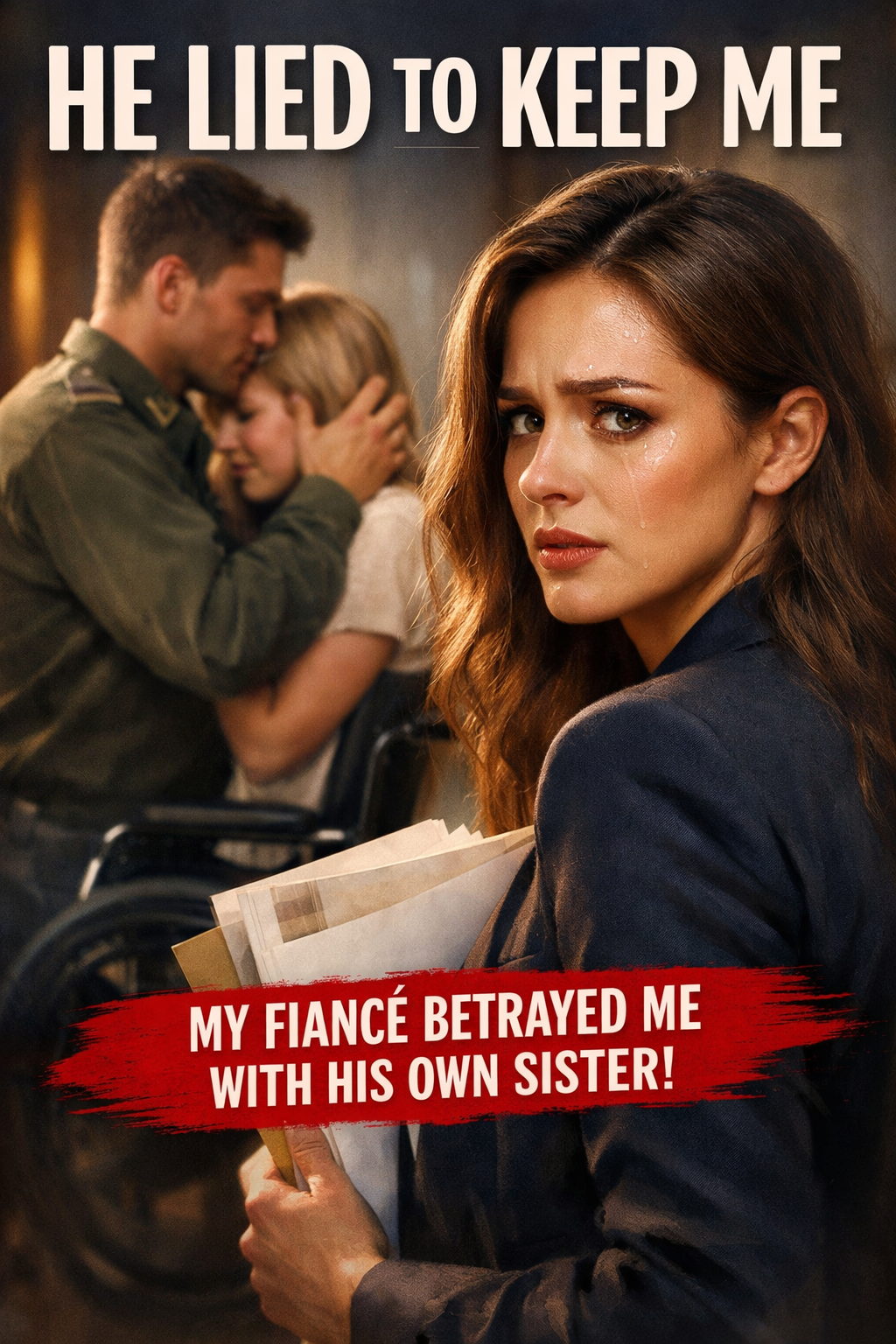
A minute after that, Mia’s wheelchair rolled to my door.
“Sophia?” she said through the wood, her voice small. “Can we talk? Just us?”
I closed my eyes.
In my past life, those words would have undone me. I had always believed private honesty lived underneath public performance. That somewhere beneath her tears and accidents and trembling hands there was a frightened girl who really did love me in her own damaged way.
I had been wrong.
“Go to sleep, Mia.”
There was silence.
Then, softly, she said, “You remember, don’t you?”